




- Home /
- Exhibitions /
- Medieval Bodies
Medieval Bodies
Opens Dec 6, 2026

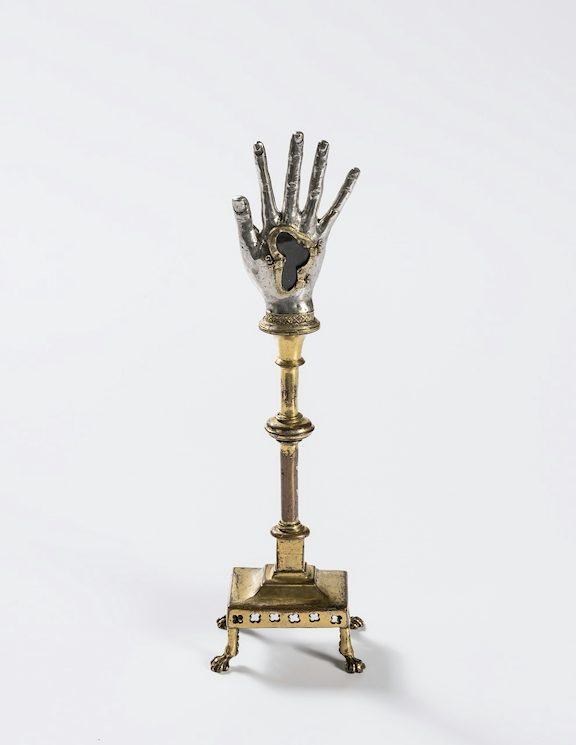
From the fall of the Roman Empire in the fifth century CE until the early sixteenth century, Catholicism reigned as the dominant religion and was a unifying cultural institution across Europe. Linked by their religious themes, the artworks in this exhibition were produced from roughly 1000 to 1550 and originate from England, France, Italy, Germany, the Netherlands, and the Iberian Peninsula. More than mere illustrations of biblical events, the religious art of this period served to educate viewers on their proper social roles, define national boundaries and racial identities, provide medical care, and ease anxieties about the fate of the immortal soul.
At the same time, these artworks demonstrate how European artists in the late medieval and early Renaissance periods used representations of the body to grapple with the human condition. Whether for public or private devotion, their depictions—of biblical figures, holy saints, and even contemporary individuals—were designed to stir empathy, self-reflection, and identification with the divine. While the works presented here were created in a time and space distant from our own, the themes they address are universal and enduring: relationships, fear of pandemic, issues of identity, and the unknowability of the afterlife.
Medieval Bodies is curated by Sarah E. Farkas, Associate Curator of Art, Crocker Museum of Art; former Kress Interpretive Fellow, Memphis Brooks Museum of Art.
Coming Soon
Presented By

Interested in learning more about sponsoring an exhibition at your museum?
Get in touch.All exhibitions at the Memphis Brooks Museum of Art are underwritten by the MBMA Exhibition Fund: Lead support provided by Kay Clark, and Maggie and Milton Lovell, with additional funding from Anonymous, Irene and Ron Ayotte, Gloria and Kenneth Boyland, Deborah and Bob Craddock, Susan and James Edelman, Debi and Galen Havner, Sally Hergenrader, James R. Humphreys, Betty and George Johnson, Kristen and Jay Keegan, Valerie and Carl Person, Deborah D. Tipton, Bill Townsend, and the Doris S. and Hubert Kiersky Charitable Remainder Trust.
Select Works